 Dev Patnaik
 Michelle Loret de Mola
2025 was defined by upheaval, but not all headlines matter equally. We look past the noise to identify the early signals that will shape the next decade and beyond.
This was a topsy-turvy year. Whether it was flip-flopping tariff regimes, shifting geopolitical alliances, or stock market gyrations, 2025 brought more than its fair share of turbulence.
Wars continued to rage across the globe. Mass shootings occurred on a near-daily basis. ICE agents marauded major American cities, creating scenes normally witnessed in banana republics. And the federal government was shuttered for 43 days—the longest shutdown in American history.
And while it’s easy to feel bewildered and exhausted, it’s important to stay focused on the future. Many of the headlines we saw won’t matter much in five or ten years. Those stories are moments, not momentum.
Momentum comes from the larger societal shifts and technological advances that change the world we live in. And those headlines happened, too. Our teammates at Jump have spent the year collecting what we call Headlines from the Future: news stories that represent early signals of major shifts still underway. We share them on the Jump Podcast. But don’t worry if you missed an episode, because we decided to take a look back at all of the headlines from this year, and see if we couldn’t call out the stories that we think will have the biggest impact going forward.
Here then, in order of ascending importance, are this year’s top ten Headlines from the Future. They’re the stories from 2025 that most represent bigger changes yet to come.
10. GLP-1 Drugs Expanded Their Adoption and Effectiveness
Originally formulated for diabetes care, drugs like Ozempic and Wegovy expanded in both their reach and impact. More and more of us started using GLP-1s than ever before. The Food and Drug Administration approved the drugs for weight loss and the prevention of kidney and liver disease, too. And because they impact the brain’s pleasure centers, GLP-1s might help curb a host of other behaviors, including alcohol consumption and even gambling. Meanwhile, new versions in pill form moved to late-stage trials. The drugs are impacting more than healthcare: household panel data showed people spent 6% less on groceries within six months of starting a GLP-1. As GLP-1 use becomes widespread, entire business models built on human appetites and impulsive behavior will quietly start to fail—and many companies won’t realize why until the numbers stop adding up.
Read more about Eli Lilly’s Oral GLP-1
9. Cities Struggled to Adapt to Climate Disasters
Across the globe, communities felt an increasing barrage of disasters caused by our warming planet. Thousands were displaced by fires in Los Angeles. Tropical cyclones tore across South Asia. And countless thousands across the planet died from extreme heatwaves. Local governments struggled to adapt to change. After 136 people in Texas were swept away in a flash flood, it was discovered that lives could have been saved by a long-delayed flood warning system. Cities that made climate adaptation investments avoided the worst outcomes. New York saw massive flooding, but redesigned streets and improved coastal barriers helped to reduce the damage. Those same challenges are making property insurance increasingly unviable in many parts of the country. Going forward, though, businesses are realizing that they can’t rely on underfunded municipal infrastructure and a battered insurance industry to protect against the worst-case scenarios.
Read more about California’s Property Insurance Crisis
8. As AI Fueled Mental Health Harms, We Began Treating Technology Like Tobacco
Over the past two years, technology regulation took a public-health turn. Last year, the U.S. Surgeon General called for warning labels on social media. This year, Australia banned social media for children under the age of sixteen. Concerns turned to AI as reports surfaced of chatbot-inspired suicides and AI-induced psychosis. Talking to ChatGPT can be harmful to your mental health. Courts responded by denying First Amendment protection to chatbot output in a case involving a 14-year-old, while a wrongful-death lawsuit filed by the parents of a 16-year-old against OpenAI intensified scrutiny. For their part, leaders of AI companies have tried to assure the public that they’ll find a way to make their products safe… eventually. For everyone else, the implication is simpler. Open-ended AI systems are being released faster than we understand their effects. And until accountability and safeguards catch up, deploying them without clear boundaries is starting to look less like innovation and more like negligence.
Read more about AI Psychosis
7. Fusion Power Moved Closer to Commercialization
Fusion energy stopped being science fiction in 2022, when researchers at the Lawrence Livermore Laboratory showed they could produce more energy from a fusion reactor than they put in. This year, companies began building grid-scale fusion plants. Commonwealth Fusion Systems signed a deal to supply power to Google’s data centers, and broke ground on a new power plant in Virginia. Billions of dollars of private investment money flowed into fusion commercialization, and the British government joined in with public funding. Access to clean and limitless energy may be just around the corner. When it arrives, it will erode existing competitive moats and open up wild new opportunities.
Read more about Google’s move into fusion energy
6. Personalized Gene-Editing Saved Human Lives
In 2012, CRISPR technology created the ability for scientists to precisely edit a living organism’s genome. This year, researchers used it to perform an individualized medical miracle. Baby KJ was born in August with a rare genetic blood disorder, and doctors didn’t expect him to see his first birthday. Using CRISPR, scientists were able to effectively erase the disorder from his DNA. Gene editing trials have since expanded to more common conditions, like high cholesterol. For years, the public was concerned about consuming GMO foods. We may soon reach a point where many of the people you meet are themselves genetically modified organisms.
Read more about Baby KJ
5. Robotaxis Expanded to More Cities as Self-Driving Trucks Hit the Highway
Self-driving cars have long been the stuff of science fiction. Today, Waymo robotaxis are a common sight in cities like San Francisco and Austin. Data released this year showed that autonomous vehicles are a lot better drivers than you and me. They’re safer. They follow the rules of the road. And they’re more polite. This year, autonomous driving technology expanded to commercial vehicles, with self-driving trucks carrying goods between Houston and Dallas. That’s good, because the U.S. has a huge shortage of commercial truck drivers. That’s bad, because we have over 3.5 million truck drivers now, and they might all soon be out of a job. As autonomy shifts from novelty to norm, business leaders need to revisit assumptions about how everything from leisure travel to freight logistics happens in a self-driving world.
Read more about autonomous robotaxis
4. China Pulled Ahead as the World Leader in Green Technology
This year, the U.S. government slashed funding for green technology, turning its focus back to oil and gas. American automakers scaled back their EV ambitions. Even U.S. technology companies backpedaled from their net-zero goals. The result was a huge gift to China. China now produces the majority of the world’s solar panels, wind turbines, batteries, and electric vehicles. The country achieved a renewable energy surplus and began exporting clean power to its neighbors. Given America’s past-focused policies, China’s lead is likely to widen in the years to come.
Read more about China’s lead in cleantech
3. AI Fueled the Global Race for Energy and Compute Infrastructure
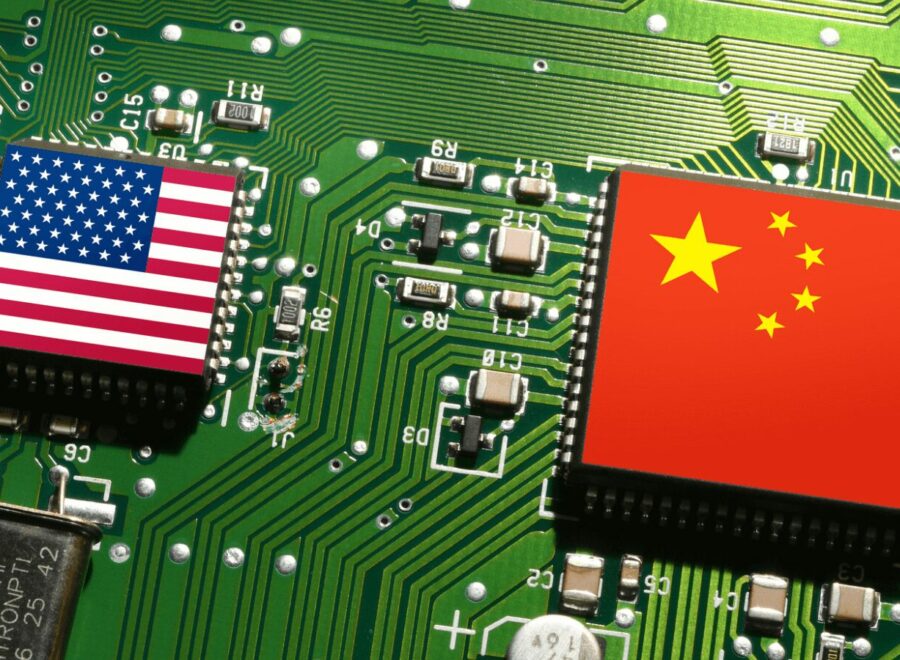
Last year, the demand for computing power led tech giants like Amazon, Google, and Microsoft to bet big on unconventional solutions, from small modular nuclear reactors to geothermal energy projects. This year, the race moved beyond meeting demand to winning in AI. Governments began competing over chip sovereignty and the critical minerals needed to build AI infrastructure. New policies tied renewable and nuclear buildout directly to AI demand. Restrictions between the U.S. and China intensified, and the search for copper and lithium expanded to places once considered out of reach, including deep-sea mining and lunar exploration. Leaders now need to treat energy, chips, and critical materials as strategic inputs, not background constraints.
Read more about AI and the race for resources
2. Companies Started Cutting Jobs Because of AI
For years, we’ve debated whether AI would help people do their jobs or replace them altogether. In 2025, that debate stopped being theoretical. Companies slowed hiring as they moved to AI-streamlined workflows. Companies like Microsoft and Amazon announced layoffs so they could afford to fund buildouts of massive AI infrastructure. Recent data showed employers cited AI in nearly 55,000 job losses year-to-date. But whether AI is driving real business transformation is still unclear. Task gains are well-documented. Enterprise payoff is murky. As the pressure to cut costs increases, workforce decisions need to be driven less by efficiency targets and more by where AI will truly change critical workflows and reshape competition over the next five years.
Read more about AI job cuts
1. America Started Unwinding a Century’s Worth of Security and Trade Alliances
For decades, the global order rested on a simple exchange: the United States offered other nations security and stability, and we gained influence and prosperity in return. In 2025, that foundation cracked. The U.S. moved to withdraw from major multilateral commitments. We slashed foreign aid. We withdrew from participation in organizations like the WHO. We suggested that our defense commitments to allies might not be binding. And we ended our commitment to free trade with a series of ill-conceived and rapidly changing tariff regimes. Allies realized that they could no longer rely on our protection. Trading partners no longer see us as a reliable partner. And nations in need of help are turning to China and Russia. It’s not the end of the Pax Americana. But it’s the beginning of the end. Like it or not, leaders need to plan for a world where U.S.–led stability doesn’t return anytime soon, and adjust supply chains, regulatory strategies, and government engagement accordingly.
Read more about the end of the Pax Americana
Preparing Over Predicting
Headlines from the Future aren’t forecasts. They’re simply documents of what’s happening right now. In a year defined by chaos—whiplash policy shifts, institutional breakdowns, and a constant drumbeat of crisis—they offer a way to separate noise from momentum. In 2025, workforce decisions were made. Infrastructure was locked in. Alliances shifted. New technologies crossed thresholds that can’t be uncrossed.
And yet, it’s not necessarily the case that the future will be a straight-line extrapolation from these events. How things evolve is yet to be seen. The value of these headlines isn’t prediction; it’s orientation. A future-focused leader doesn’t try to guess what happens next, but instead considers what these shifts make newly possible—or newly dangerous—and prepares accordingly. In moments like this, staying oriented matters more than being right. It’s about preparing over predicting.
As this year closes, it’s worth pausing—not to relive the noise, but to notice what quietly changed beneath it. Some assumptions that once felt permanent proved fragile. Others we barely noticed have now hardened into constraints that will shape the next decade. The leaders who emerge strongest from 2025 won’t be the ones who reacted fastest or predicted best. They’ll be the ones who learned to see clearly in the middle of disorder, and who carried that clarity forward when the headlines moved on.
See you next year.
With thanks to Debbie Meron and Austin Wuthrich for their contributions.